
Creative Placemaking Consulting Real Estate
When a Mural Costs You a Client: The Hidden Economics of Public Art
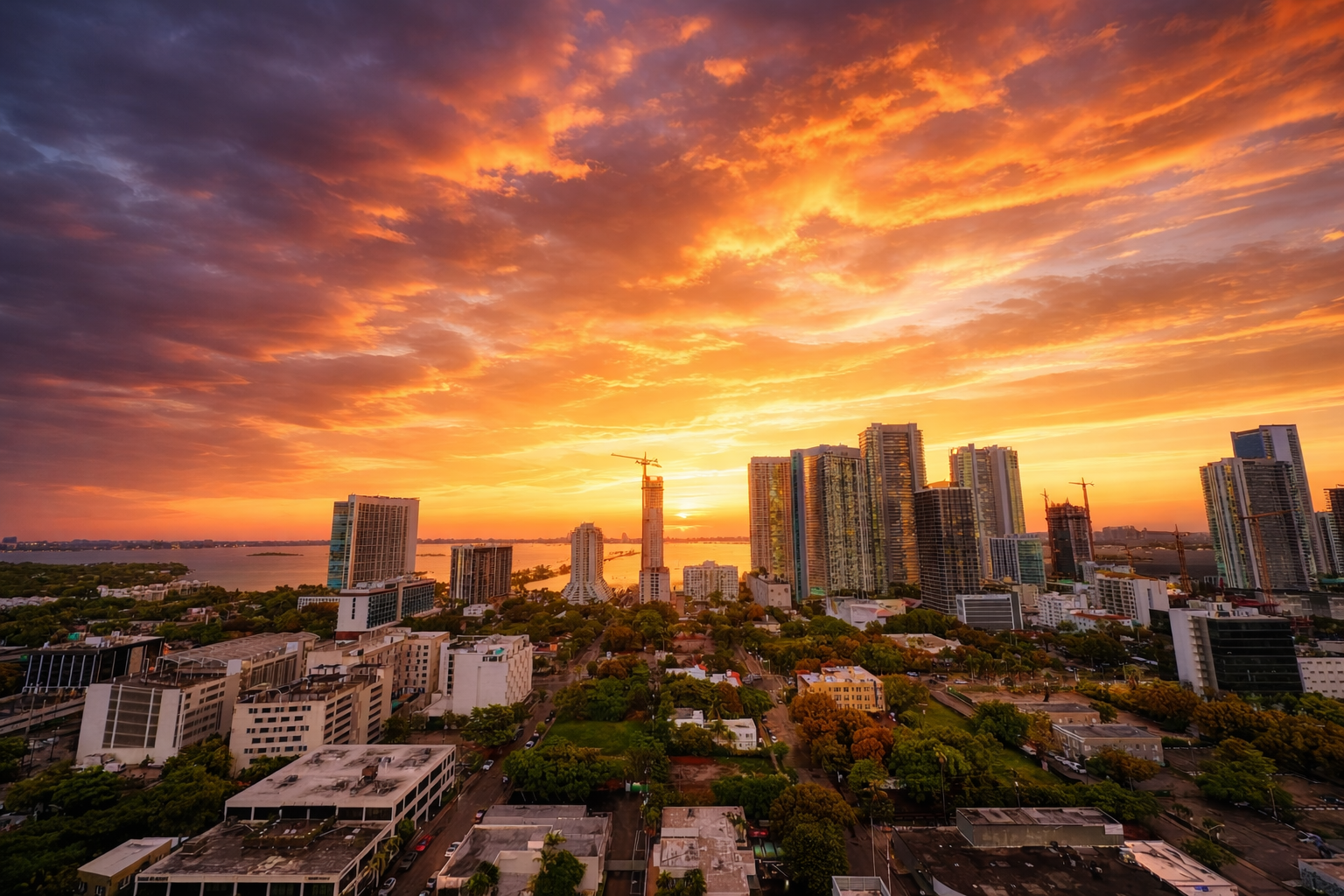
It started with a balcony view. I was visiting Stephanie Kassoy, Creative Director, curator, LEED Accredited Professional, Civil Engineering Manager, and someone who has spent years working at the intersection of street art and urban space in Miami. She had specifically chosen her apartment to avoid looking at a particular mural. Not because she dislikes street art. Quite the opposite — she has dedicated several years of her career to it. She avoided it because the color palette clashed with the skyline, and the scale felt wrong for the building it sat on.
That one mural, on a residential building in a vibrant neighborhood, had the power to quietly redirect a real estate decision.
"There is one mural that, to me, because of the color palette, is not very cohesive with the skyline and the natural sky of the city. So I actually specifically picked an apartment that did not have to look at that wall."
Think about that for a moment. For every Stephanie who consciously chose to look away, how many others simply walked away — from a showing, a lease, a purchase — without ever articulating why? The impact of poorly executed public art is rarely measured, but it is real. It is economic. And it begins long before anyone picks up a brush.
Too Many Hands, Not Enough Vision
When Stephanie and I chatted about what goes wrong in large-scale mural projects, the picture was familiar: architects, owners, property managers, artists, and a budget — all pulling in slightly different directions. In a best-case scenario, those tensions produce something extraordinary. In a worst case, they produce something nobody wanted, and everyone has to live with.
"There are a lot of different fingers in the pot when it comes to commercial projects. You have the architect's opinion, the owner's opinion, the property manager's opinion, the artist's opinion, and then you have the budget. And sometimes when the budget goes too low, the artist just stops caring. You don't end up with a great product if there's too much creative direction coming from too many different directions either. You need to be really careful about what that direction is. You keep the artist, but the artist also needs to think about the long-term impact of their piece — through different times of light, across seasons, across the day."
This is something that rarely appears in a project brief: the mural will be seen in every season, at every hour, for potentially decades. The artist who thinks about that relationship — between their work, the light, and the life of the building — is not just a talented painter. They are a collaborator in shaping how people feel about a place.
Scale Is a Skill
One of the more nuanced points Stephanie raised was about the relationship between an artist's talent and their suitability for a specific project. The group responsible for the mural she dislikes is the same group behind other work she genuinely admires. The problem was not the artists. The problem was the match between their practice and the scale of that particular building.
This matters enormously, and it is something that committee-based selection processes often miss. A portfolio review can tell you whether someone's work is beautiful. It cannot always tell you whether they have the technical and conceptual skill to execute that work across six stories of concrete in a way that holds together visually from the street below.
"Interestingly, I found out recently that the group of people who painted the one I really don't like also paint things I really do like. But I probably would not have put that group on a building of that size. I think you have to make sure that when you're selecting someone for a large project, they have the skills to handle the scale. It can look charming at a small size — cute, even — but completely fall apart when blown up."
Selecting for talent without checking for scale is how you end up with something that reads as charming on a laptop screen and overwhelming — or incoherent — in person.
Wynwood, 2017: When It Still Felt Like Something
I think often about what Wynwood was in those years — and specifically about December 2017, during Miami Art Week, when I worked alongside Stephanie Kassoy on the Basel House Mural Festival at the RC Cola Plant. The festival brought together over 80 street artists from across the globe — Fanakapan from the UK, Nuno Viegas from Portugal, RISK from L.A., Sonny from South Africa — transforming six city blocks into an open-air art museum during one of Miami's most electric weeks of the year.
My role covered consulting, communication with some artists, photography, and marketing outreach — including securing press coverage that, I am glad to say, is still live today. What made that project work was not just the caliber of talent on the walls. It was the intentionality behind every decision: who was invited and where they were placed.
Even then, in 2017, you could feel the shift already underway. Wynwood had not yet become what it is today, but the real estate machinery was already running in the background — developers were paying attention, boutique hotels were opening, and the walls that had once been painted for the neighborhood were increasingly being painted for the brand.
Today, that gap is the central problem. There is more demand for murals than ever, more money in the space, and — still — not enough understanding of how to manage the process well. Developers commission work without knowing how to brief an artist. Artists accept projects without fully grasping the scale or the context. The result, on both sides, is frustration: work that neither party is proud of, and walls that could have been landmarks instead of becoming background noise.
The Case for Consulting
During our conversation, I mentioned my recent Wynwood Walk with the renowned architect Kobe Karp. I asked him how artists were selected to paint murals. He shared that an artist had approached a developer directly, offering to paint for low cost in exchange for prime placement on a large Wynwood building. The mural turned out beautifully, the artist gained significant visibility, and the building benefited from a work that genuinely enhanced its presence in the neighborhood.
But that outcome was not guaranteed by the arrangement — it was the result of an artist who understood what they were taking on, and a placement that happened to suit their practice. Replicate that model without care, and you can just as easily end up with the opposite: a rushed piece on a building it does not suit, created by someone who said yes before fully understanding the scope.
This is precisely where informed consulting changes the outcome. Not as a gatekeeper, but as a translator — between the developer's vision and the artist's practice, between what looks good in a proposal and what will hold up on a wall, between short-term cost savings and long-term value. The question of curation versus committee review does not have a universal answer. What it does have is a clear prerequisite: someone in the room who understands both worlds.
For developers, architects, and property managers where public art is part of the vision — whether it is a residential building, a mixed-use development, or a commercial space — this is not a secondary consideration. It is foundational. The right mural becomes a landmark. The wrong one becomes the reason a prospective resident picks a different building.
Working on a development with public art in mind?
Let's talk about artist selection, placement, and how to make the work last — for the building and the neighborhood.
0 Comments
No comments yet.