

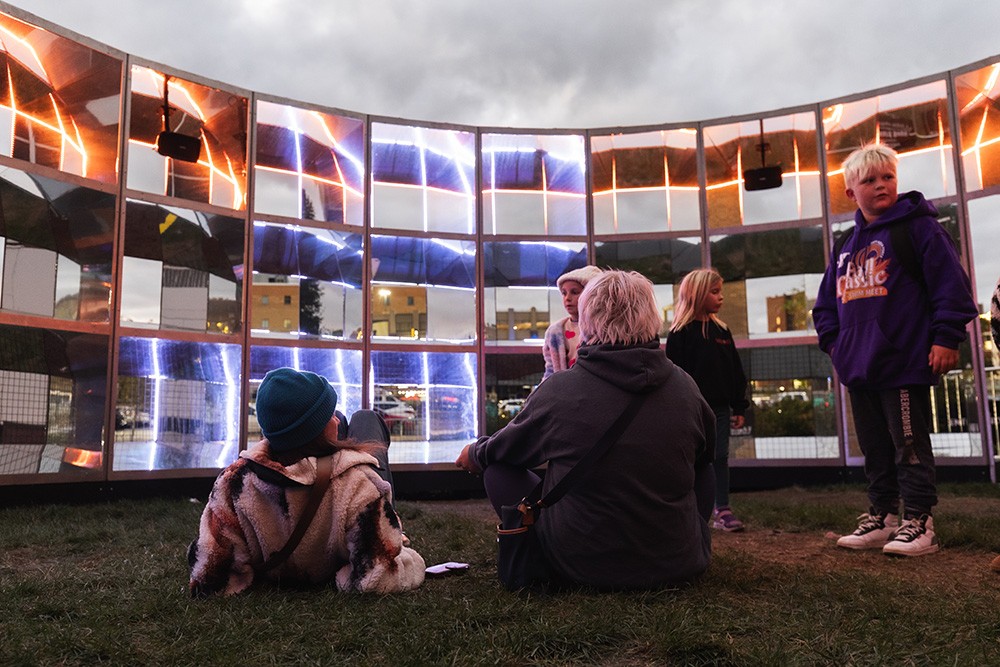
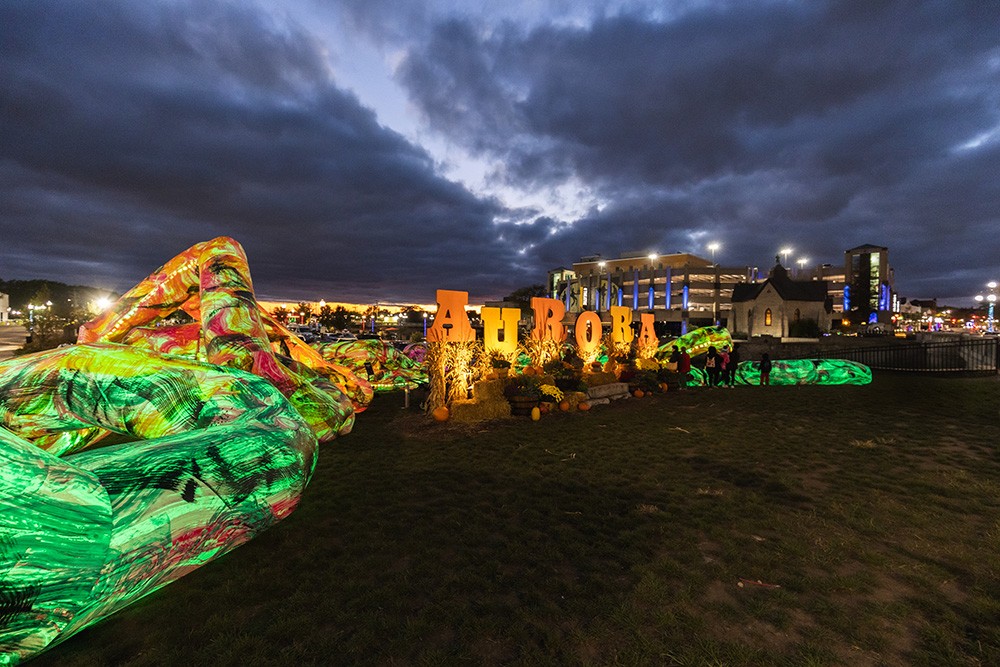
Aurora, Illinois earned the nickname "City of Lights" more than a century ago, when it became one of the first cities in the United States to light its streets with electricity. In October 2025, that history got a second act. For seventeen nights, downtown Aurora turned into a field of light, sound, and interactive art as Monochronicle curated and produced the second annual LUMENAURA festival.
The festival was free, open to everyone, and spread across the entire downtown district along the Fox River, in the second-largest city in Illinois. Its debut in 2024 drew tens of thousands of visitors, and the 2025 edition, built around the theme Convergence, expanded on that with a larger roster of artists from the United Kingdom, Germany, Hungary, Canada, and the United States. Convergence asked a plain question: what happens when art, technology, and the people of a city occupy the same public space at the same time?
Art That Responds to the People
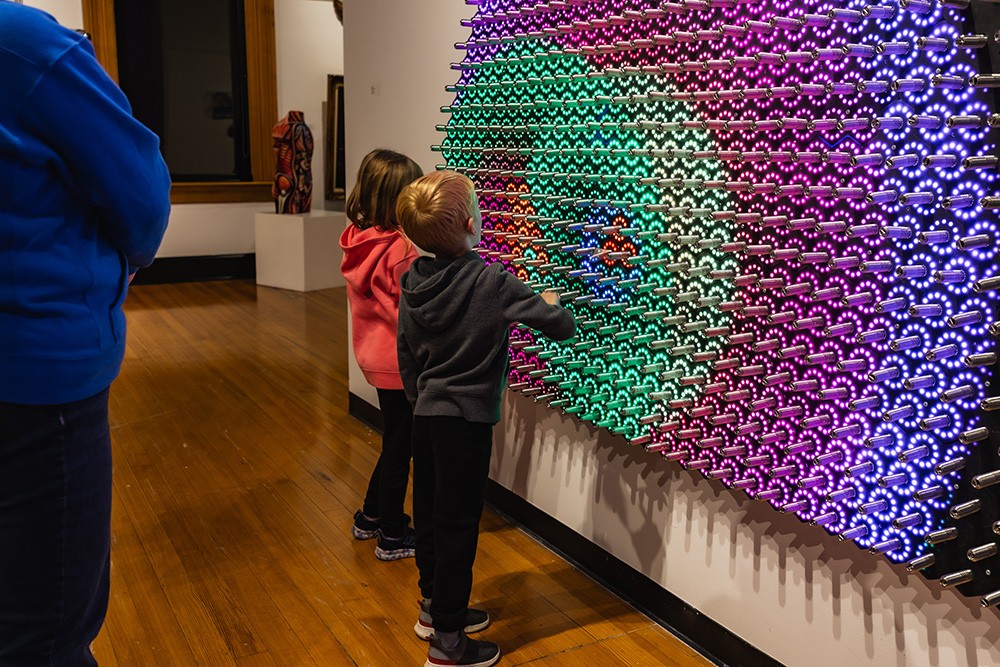
Reach out and touch one of the metal springs on Robin Baumgarten's Quantum Jungle and a pulse of light runs along the wall. Touch the next one and a second wave follows. Much of the work at LUMENAURA reacted to human presence, so no two visits looked the same.

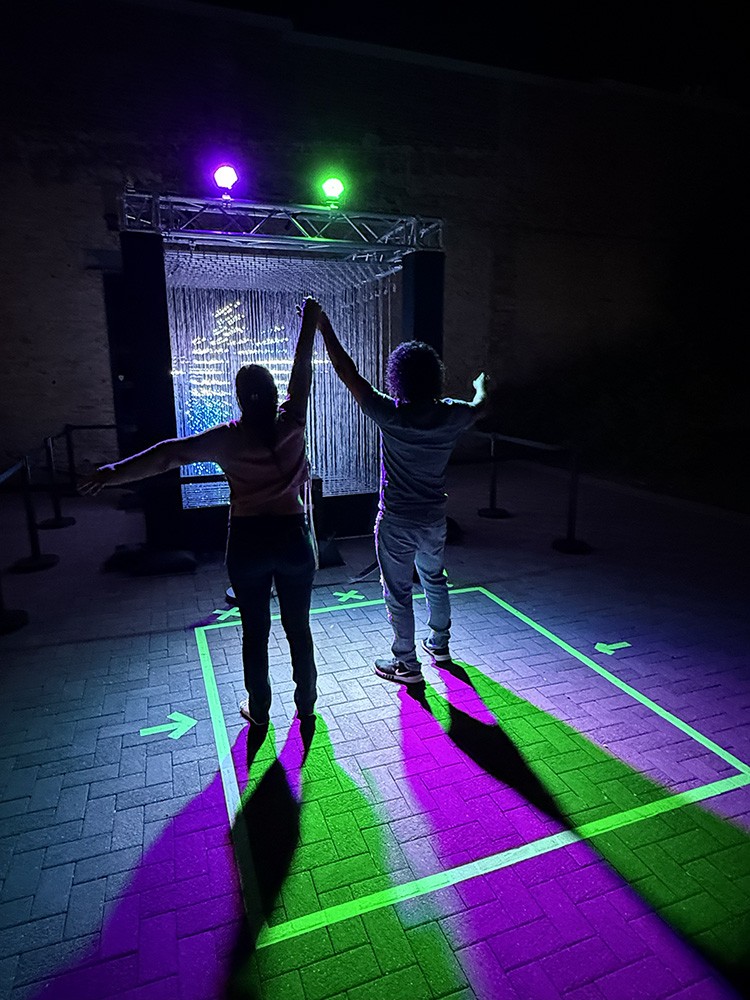
Several works changed as people moved. Scott Boeing's Vivid Volume copied visitors' movements in a three-dimensional grid of light in real time, and Particles of You, by The Zenith Creative, used hidden sensors to turn a passerby's motion into color. The Zenith Creative also ran an interactive video wall driven by lighting, sound, and motion capture. Emergence, by the British studio ThisisLoop, placed visitors inside a mirrored room about how order forms out of chaos.
Some pieces asked people to leave something behind. Daniel Eller's Echoes of Connection set up a bank of old payphones where a visitor could record a message for a stranger to find later. The Door, by BigArt, framed a walk-through portal about change and the choices that come with it.
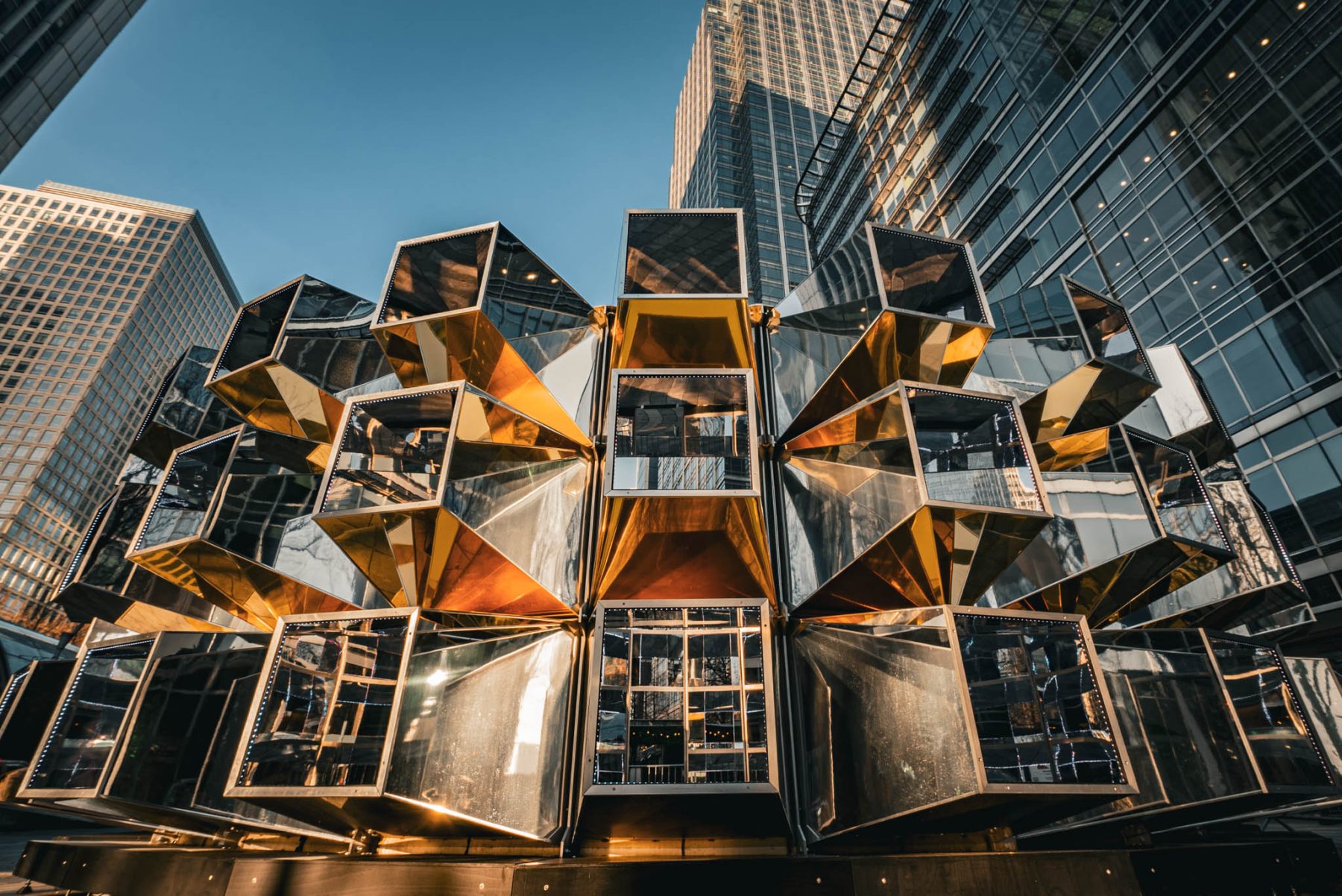
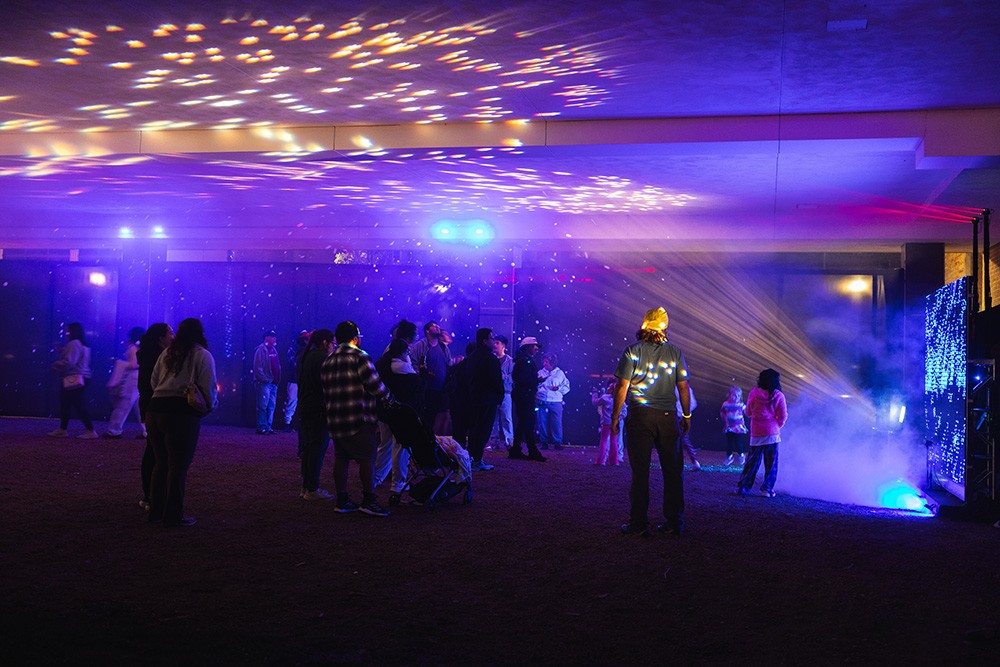
Other works pulled a crowd into one spot. LedBlade, from Hungary, built Bonfire, a light sculpture with fog and scent that anchored the opening ceremony. Enchanted Oasis, by Jeff Cason, turned a fountain plaza into an animated garden. Lux Arcana, by Crystal Wagner and Logan Luckey, was a human-controlled light sculpture that arrived on a Metra train car from Chicago. Planet Swamp, made by the Monochronicle team, filled a room with fog-filled bubbles and laser light.
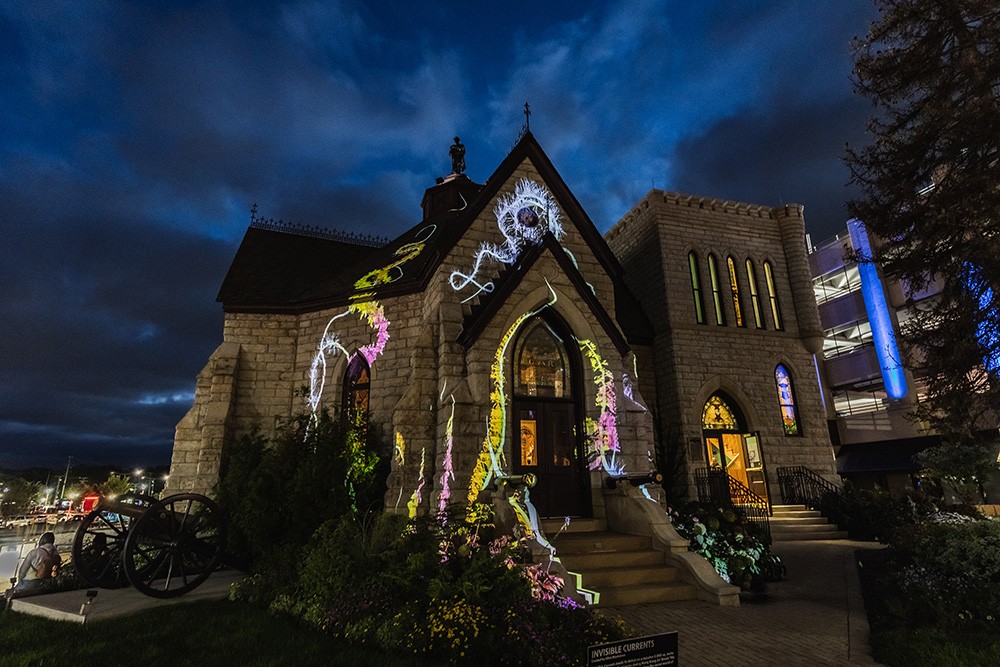
The festival also used the city itself as a screen. Alina Nazmeeva's Invisible Currents turned building facades into moving pictures, and a laser show designed by Charles Alan Rye traced the outline of the historic Paramount Theatre on festival nights. 11 Dimensions Travel Agency ran a projection piece called Illoominated 2 and a Laser Graffiti wall where anyone could draw with light. Threshold, by Daniel Murray of FuzzPop Workshop, was a water-inspired inflatable sculpture, and Oliver Lewis built Up-Next, a television set made from recycled plastic and lit from within.
Music, Ceremony, and Street Life
LUMENAURA opened on Friday, October 10 with a ceremony at The Mayan on South Stolp Avenue, where a Firekeeper led a Native ceremony and lit the Bonfire sculpture, followed by music, storytelling, and prayer ties. Over the two festival weekends, the IBEW Locals 461 and 701 Main Stage ran three nights of free concerts. Motown Nation opened with soul classics, Sixteen Candles brought an 80s set, Sin Anestesia paid tribute to Spanish-language rock, and Selena the Show, fronted by Karla Perez, closed Saturday night. The final evening paired a Taylor Swift tribute called Fearless with the arena-rock throwback Hairbangers Ball. Between the stages, circus performers, fire breathers, and wandering musicians moved through the crowd, while food trucks lined the East Benton Street bridge next to beer vendors and local businesses. The second weekend added a bonfire gathering with open storytelling and an all-ages silent disco at the Planet Swamp installation.

This is the part that speaks to the title. A festival like this gives a city a reason to come downtown together after dark. People who might never cross paths ended up standing at the same laser wall or the same food truck. The art gave them something to react to, and the free stages and street performers gave them a reason to stay.
What it Takes to Produce a Festival Like This
Producing LUMENAURA meant coordinating a lot of moving parts across a compressed calendar. The 2025 festival ran on a project budget of $440,000 and required contract administration, vendor coordination, scheduling, and financial oversight alongside the creative work. International artists needed travel arrangements, permitting, and technical support to get their work built and running on Aurora's streets.
Taking care of artists so they have a good experience in the community is central to how we work, because that experience shows up in the art itself. Chris Ragona, the City of Aurora's Director of Community Services, wrote:
"One of Monochronicle’s greatest strengths was its relationship with artists. The team provided ongoing support before, during, and after installation, helping artists navigate logistics, permitting, technical requirements, travel coordination, and production challenges. Artists were well informed, supported, and equipped with the resources necessary to successfully realize their work. "
Accessibility shaped the design from the start. About 90 percent of the artwork was ADA accessible, and the festival added a quiet space for sensory-sensitive visitors, ASL interpretation, audio description on select works, golf-cart transportation for people with mobility needs, and marked pathways between installations. Katrina Boatright, the City's Senior and Disability Services Manager, said the aim was to let everyone explore and enjoy the festival together, and that prioritizing accessibility in both design and delivery was part of what made the event work for residents and visitors.
None of this happened alone. IBEW Locals 461 and 701 powered the festival and sponsored the main stage. The City of Aurora, from Community Services to the Senior and Disability Services office, was a partner in planning and delivery. The Berman Group handled press. And the sixteen artists and collectives, from established names to newer voices, gave the festival its shape.
How We Selected the Artists
LUMENAURA 2025 was also our first live test of AI-generated summaries in the open call. We read every application in full and scored the artists by hand, then compared our own reading against an AI summary of each submission to see whether it captured the same essential information. After the festival, we shared the summaries with jurors and asked how accurate and how time-saving they were. One juror, Sangeeta, estimated that reviewing the full application packages took her 75 to 80 hours, and that the summaries would have cut that to 10 to 15 hours, a reduction of roughly 80 to 85 percent. She also found that reducing each application to plain facts about style and fit lowered the weight of factors like an applicant's English fluency or resume polish, which let her focus on the work. We are refining the tool now, including a consistent budget field and stronger eligibility checks she suggested. Read more about our tools here.
"Reviewing the full package of applications, including portfolios, letters of intent, and technical documents, took me around 75-80 hours of focused effort. With the structured AI summaries, especially the high-level Brief Candidates Analysis Report that allows for quick triage, I estimate the total review time to drop to approximately 10-15 hours. This represents a potential time savings of 80-85%, which is transformative for a large open call. The speed at which you can review the essentials of a Comprehensive Profile versus a Self-Presented Artist is invaluable." - Sangeet Pande.
A light festival suits a city that helped bring electric street lighting to the country. For seventeen nights, LUMENAURA gave Aurora's residents and visitors a reason to spend an evening downtown, and it gave them art that only worked when they walked up and touched it. That is the practical argument for public art at this scale. It brings people into shared space, and it leaves them with something they experienced together. We are already planning the next one.




0 Comments
No comments yet.